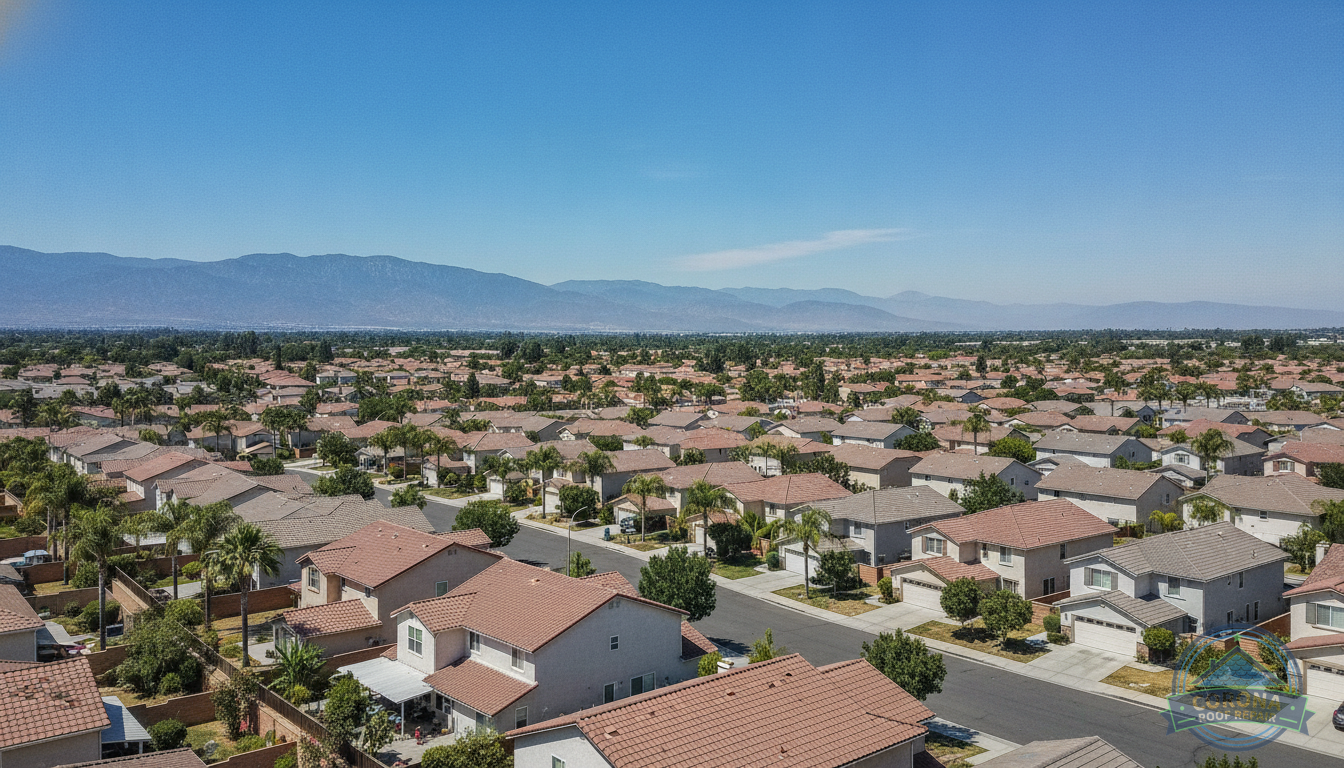
Your Roof Has a Tougher Job in Corona Than Almost Anywhere Else
Roofing materials are designed and tested to handle climatic stress, but the combination of stressors present in Corona, CA is genuinely demanding. Intense UV radiation through most of the year, summer temperatures that regularly exceed 100°F, periodic Santa Ana wind events, and concentrated periods of rainfall after long dry spells — each of these forces degrades roofing systems in distinct ways. Understanding how they interact helps homeowners make smarter decisions about maintenance, repair timing, and material choices.
This guide draws on what our team at Corona Roof Repair observes every day while working on roofs across Corona Hills, South Corona, Home Gardens, Norco, and the broader Inland Empire.
UV Radiation: The Slow, Constant Attacker
Ultraviolet radiation is the single biggest long-term threat to most roofing materials in Southern California. At Corona's latitude and elevation, with clear skies dominating roughly 280 days per year, roofing materials receive enormous cumulative UV exposure over their service lives.
For asphalt shingles, UV degradation works from the top down. The granule coating that gives shingles their texture and color isn't decorative — it's the primary UV shield protecting the underlying asphalt and fiberglass mat. As granules loosen and wash into gutters over years of sun exposure, the asphalt beneath becomes brittle, cracks, and eventually allows water through.
Clay and concrete tile roofs fare better under UV exposure, but the mortar at ridge caps and hip tiles, and the underlayment beneath cracked or broken tiles, can degrade significantly faster in high-UV environments.
What you can do: Schedule a roof inspection every one to two years to track granule loss and surface degradation before it reaches the point of water intrusion. If shingles show significant surface weathering, our shingle replacement service can address damaged sections before underlying decking is compromised.
Extreme Heat: What 150°F Attics Do to Your Roof
On a 105°F summer afternoon in Corona, an attic with inadequate ventilation can reach temperatures of 150°F or higher. That extreme heat doesn't just make your upper floor uncomfortable and drive up your air conditioning costs — it actively destroys your roof from the inside out.
Heat causes the adhesive strips on asphalt shingles to soften and potentially re-bond in deformed positions. It dries out the asphalt itself, accelerating the brittleness caused by UV exposure. It can warp roof decking over time, creating undulations that affect how well surface materials lie flat and drain. And it stresses the sealants used around flashing, pipe boots, and penetrations, causing them to dry out and crack years ahead of schedule.
Flat roofing membranes face their own heat challenges. TPO and modified bitumen membranes expand and contract with temperature swings, and over years of thermal cycling, seams that weren't welded or adhered with sufficient overlap begin to separate. Blistering — the formation of air or moisture pockets beneath the membrane surface — is also accelerated by extreme heat and is especially common on older Corona flat roofs.
What you can do: Invest in proper attic ventilation. Our roof ventilation improvement service creates a balanced airflow path from soffit vents at the eaves to ridge vents at the peak, dramatically reducing attic temperatures and extending the life of your entire roofing system. For flat roof concerns, our flat roof repair service addresses blistering and seam failures before they become active leaks. You can also explore flat roof repair in Corona Hills or flat roof repair in South Corona for area-specific service information.
Santa Ana Winds: The Sudden Threat
Santa Ana wind events typically arrive between late fall and early spring, driving hot, dry air from the inland desert regions westward through passes and canyons at sustained speeds of 25 to 50 mph, with gusts that occasionally exceed 70 mph in exposed locations. In elevated neighborhoods like Corona Hills, these events hit particularly hard.
For roofing systems, high winds are most damaging where material edges, corners, and seams are present — which is precisely where every flashing termination, every shingle edge along the rake, and every ridge cap is located. Shingles that have already been weakened by UV and heat are at significantly higher risk of being lifted or blown off entirely during a wind event. Even shingles that don't blow completely off may have their seal strips broken and tabs lifted, allowing wind-driven rain to push water underneath on subsequent storms.
Flashing is equally vulnerable. Metal that has already separated from its substrate due to thermal cycling can be further lifted by wind, turning a small gap into a large opening.
What you can do: After any significant wind event, visually scan your roofline from the ground for obvious missing shingles or displaced ridge caps. Follow up with a professional inspection — our roof inspection service includes a post-storm assessment to identify less obvious damage before the next rain arrives. Wind-damaged shingles can often be addressed quickly through our shingle replacement service, and lifted flashing through our roof flashing repair service.
Seasonal Rain After Long Dry Spells: The Hidden Danger
Corona's rainfall is concentrated into a relatively short wet season, often arriving after months of dry conditions. This pattern is particularly hard on roofing systems for a counterintuitive reason: the same UV and heat degradation that accumulates during the long dry period doesn't become apparent until rain arrives and finds its way through newly opened gaps.
Sealants around flashing and pipe boots that dried out during summer may not be obvious until rain pushes against them. Cracks in shingles that formed from UV brittleness aren't a problem during dry weather but become active leak points as soon as water arrives. Even debris accumulation on flat roofs — leaves and organic material that built up over the dry season — can trap water against the membrane once rain returns, accelerating deterioration.
This is why late summer and early fall — before the rainy season begins — is actually an ideal time for a preventive inspection in Corona. Our roof inspection service helps homeowners identify and address vulnerabilities during dry conditions when repairs are easier to schedule and complete, rather than scrambling for emergency service after a storm.
Building a Roof Maintenance Routine for the Inland Empire
Given the specific stressors Corona's climate imposes, here's a practical annual maintenance framework our team recommends for most local homeowners:
- Spring (March–May): Inspect gutters for granule accumulation after winter rains. Look for lifted or missing shingles from late-season wind events. Schedule a professional inspection if you noticed any interior water stains during the wet season.
- Summer (June–August): Monitor your upper floor temperature and cooling costs as an indicator of attic ventilation performance. Consider a ventilation assessment if your second floor is unusually hot.
- Early Fall (September–October): Best window for preventive inspections before rain returns. Address any flashing, sealant, or shingle issues identified. Clear drains and scuppers on flat roof sections. Our flashing repair service and leak repair service can both be scheduled promptly during this period.
- After Wind Events: Visual ground-level check immediately following any significant Santa Ana wind event. Schedule a follow-up inspection if you see anything concerning.
Serving Homeowners Throughout Corona and the Inland Empire
Corona Roof Repair works with homeowners throughout the area, including Corona Hills, South Corona, Home Gardens, Norco, Eastvale, and Mira Loma. We're available Monday through Sunday, 8:00 AM to 6:00 PM.
To schedule a roof inspection, discuss a repair, or get a second opinion on work recommended by another contractor, call us at +1 (951) 612-3080 or email [email protected]. We're based at 1245 W 6th St, Unit 104, Corona, CA 92882 and know this climate and these neighborhoods well.
Confirm Availability
Call +19516123080 or fill out our online form for a free, no-obligation quote.
Request Free Quote