Understanding Your Roofing Options in the Inland Empire
Whether you're building new, replacing an aging roof, or converting an existing structure, the choice between a flat (or low-slope) roof and a conventional pitched roof is one of the most consequential decisions a Corona property owner can make. Both systems have genuine strengths and real trade-offs — and the right answer depends heavily on your property type, budget, and long-term goals.
At Corona Roof Repair, we work on both systems every week across Corona Hills, South Corona, Norco, Eastvale, and surrounding communities. Here's an honest breakdown of how each system performs in our local climate.
How Pitched Roofs Perform in Corona's Climate
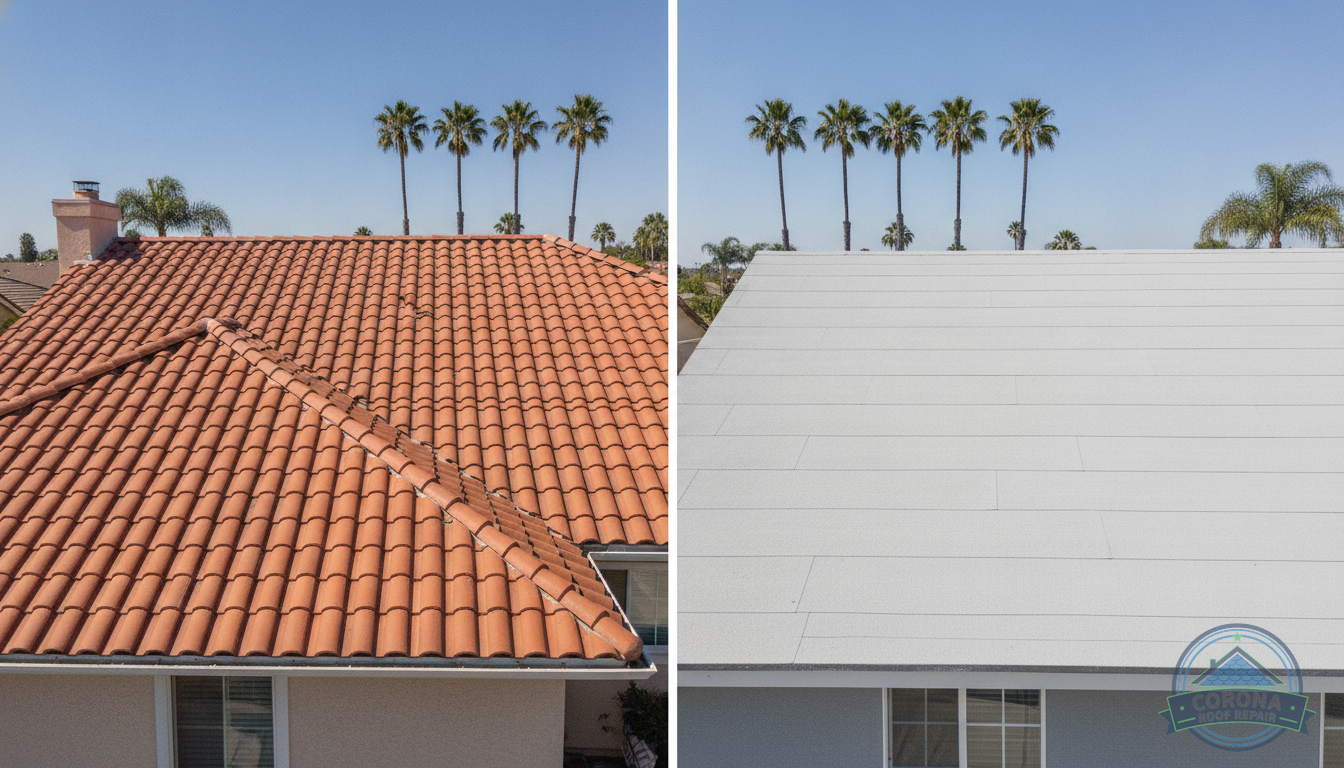
The steep or moderately sloped roofs you see on most Corona single-family homes — typically covered in asphalt shingles or clay tile — rely on gravity to shed water quickly. Because water doesn't have time to pond and infiltrate, a properly installed pitched roof with intact shingles and good flashing is extremely water-resistant even during heavy rain events.
In Corona's climate, the main challenges for pitched roofs are UV degradation and wind. Asphalt shingles absorb enormous amounts of solar radiation year after year, gradually losing the granule coating that protects them and becoming brittle. Santa Ana wind events can lift inadequately fastened shingles, and thermal expansion at flashing joints slowly works seals loose over time.
The good news is that most pitched roof problems are straightforward to diagnose and repair. Our shingle replacement service addresses localized damage quickly, and our roof flashing repair service handles the metal work around chimneys, skylights, and wall intersections where leaks most commonly originate on sloped roofs. Proper attic ventilation is also critical — our roof ventilation improvement service can dramatically extend shingle life by reducing the extreme heat that builds up beneath an underventilated roof deck.
How Flat Roofs Perform in the Inland Empire
Flat roofs — more accurately called low-slope roofs, since they always have a slight pitch to direct drainage — are common on commercial buildings, additions, and some contemporary residential designs throughout Corona. Rather than shedding water by gravity, they rely on a continuous waterproof membrane and functioning drainage components to move water off the surface before it has time to infiltrate.
Corona's climate presents specific challenges for flat roofing membranes. Summer temperatures regularly exceed 100°F, which accelerates UV degradation and thermal expansion at seams — the most vulnerable point on any membrane system. When a seam separates or a membrane blisters and ruptures, water can enter gradually and go unnoticed for weeks before interior damage becomes apparent.
The most common flat roofing membranes in our service area include:
- TPO (Thermoplastic Polyolefin): A popular white membrane that reflects solar heat and is heat-welded at seams for a strong bond. Well-suited to commercial applications and flat residential additions.
- Modified Bitumen: A reinforced asphalt-based membrane applied with a torch or peel-and-stick method. Durable and familiar to most roofing crews, common on older residential flat sections.
- EPDM (Ethylene Propylene Diene Monomer): A rubber membrane typically used on commercial buildings. Highly flexible but requires compatible materials for repairs — patching with the wrong products causes premature failure.
Our flat roof repair service covers all three membrane types, using compatible materials and techniques specific to each system. We also address drainage components — clearing clogged scuppers, removing debris from internal drains, and resealing parapet wall flashings that have pulled away from the wall surface.
Maintenance Requirements: What to Expect Over Time
Honest maintenance expectations should factor heavily into your decision.
Pitched roofs require relatively little routine maintenance when installed correctly. Keeping gutters clear so water drains freely, having flashing inspected every few years, and scheduling a professional roof inspection after major wind events or every one to two years is typically sufficient. When problems develop, they're usually visible from the ground or during a standard inspection.
Flat roofs demand more attentive maintenance. Debris accumulation on a flat surface blocks drains and creates conditions for ponding water. Seams and membrane edges should be inspected at least annually, and standing water that remains more than 48 hours after a rain event is a red flag that drainage needs attention. Because flat roof leaks can be slow and diffuse rather than sudden and obvious, periodic professional inspections are especially valuable.
Cost Considerations for Corona Homeowners
Initial installation costs for flat roofing systems are often lower per square foot than a comparable pitched roof installation, primarily because there's less material and the labor is less complex. However, flat roofs typically have shorter expected service lives than quality tile or architectural shingle installations, and repair frequency tends to be higher in a climate as thermally demanding as Corona's.
Quality clay or concrete tile roofs — common throughout South Corona and Corona Hills — can last 40 to 50 years with proper maintenance, making their higher upfront cost more cost-effective over a long ownership horizon. Architectural asphalt shingles typically carry 25 to 30-year manufacturer warranties in optimal conditions, though Corona's UV intensity means real-world performance often falls somewhat short of those figures without good attic ventilation.
Choosing the Right Inspection and Repair Partner
Regardless of which system covers your property, the most important step is understanding its current condition. Our roof inspection service produces a written report with photographs documenting the condition of your roof's components, any deficiencies found, and a clear prioritization of what needs attention now versus what can be monitored.
We serve homeowners and property managers throughout Corona and the surrounding Inland Empire — including Mira Loma, Norco, Home Gardens, and Eastvale. Call us at +1 (951) 612-3080 any day of the week between 8:00 AM and 6:00 PM to schedule an inspection or discuss your roofing options.
- Flat roof membrane repair: Flat Roof Repair
- Pitched roof leak diagnosis: Roof Leak Repair
- Shingle damage assessment: Shingle Replacement
- Full condition report: Roof Inspection
Confirm Availability
Call +19516123080 or fill out our online form for a free, no-obligation quote.
Request Free Quote